
Model for KAPLA® planks: 3-deck ferry
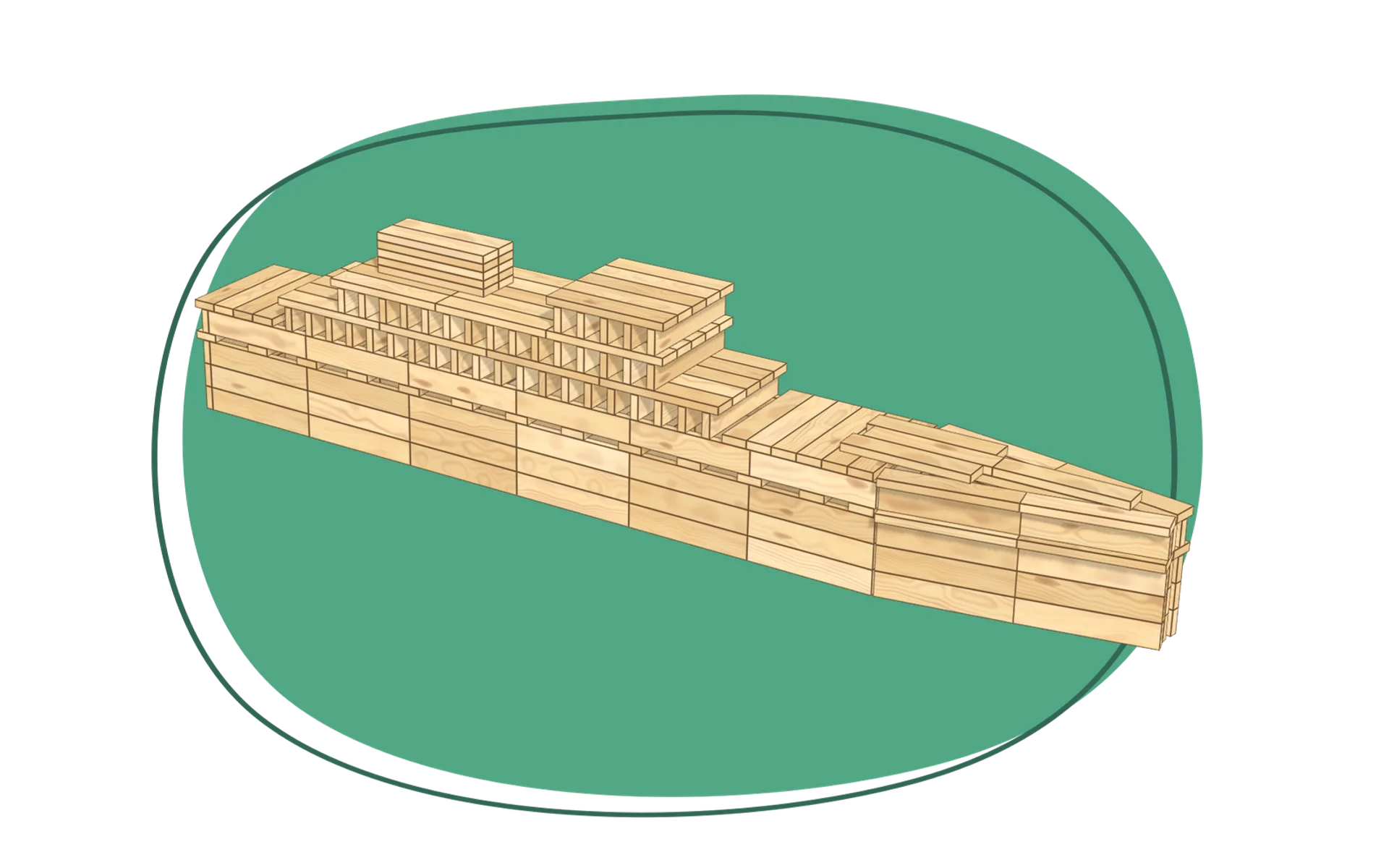
Pieces
Difficulty
Time
Age from
Dimension
Shared by
Build the ferry from KAPLA planks step by step
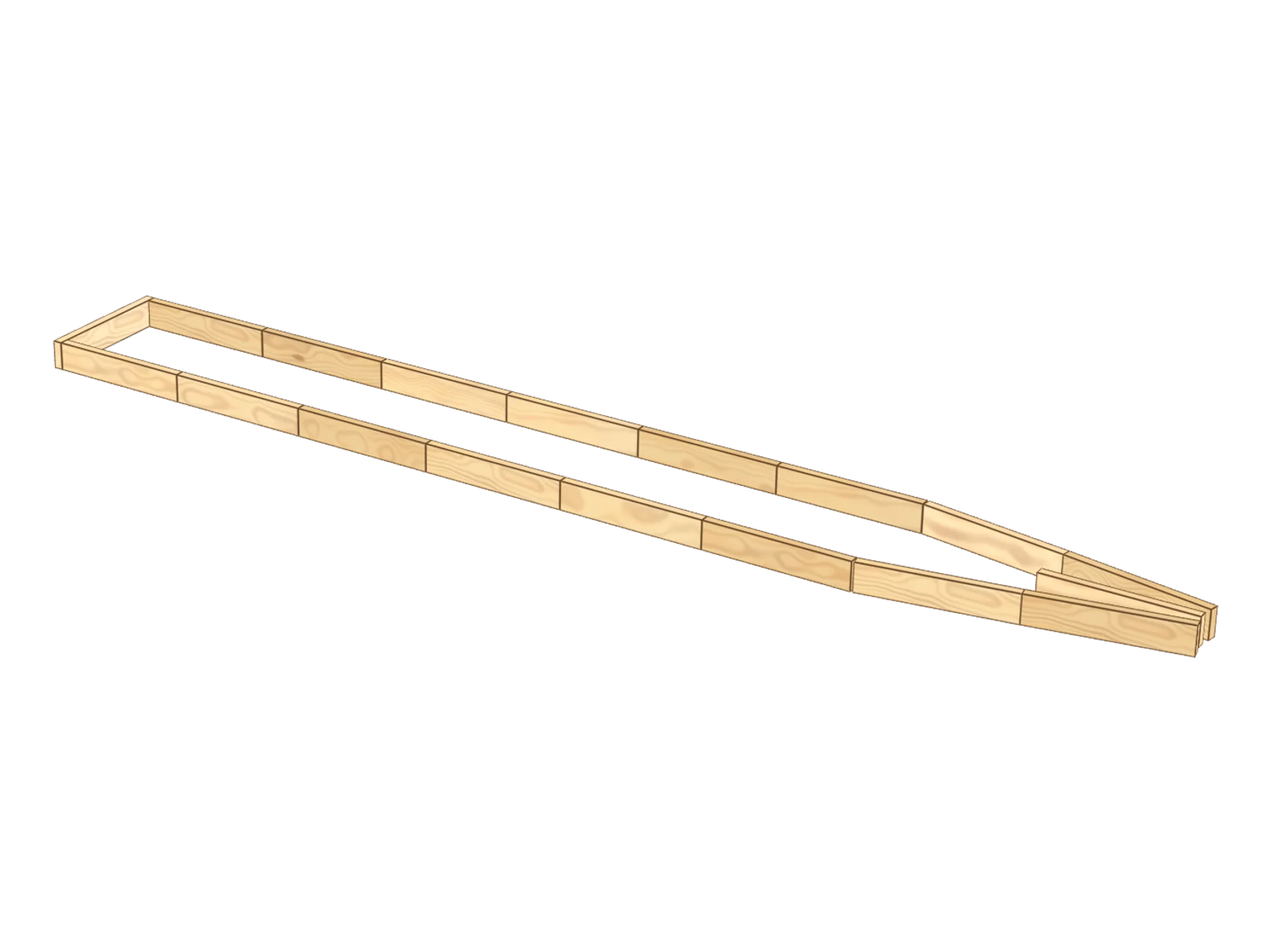
Step 1: draw the base of the ferry’s hull
Lay the first plank at the back: it sets the width of the hull. Then add 6 planks on each side, perpendicular to it. Add 2 planks on each side, slanting towards the centre, to shape the bow, the tip of the ferry (without closing it!). Slide one last plank into the middle of the bow, on edge as well.
💡 Tip: lay the bow planks end against end, without overlapping them. The plank in the centre doesn’t touch the sides either: it will be useful in the next steps!
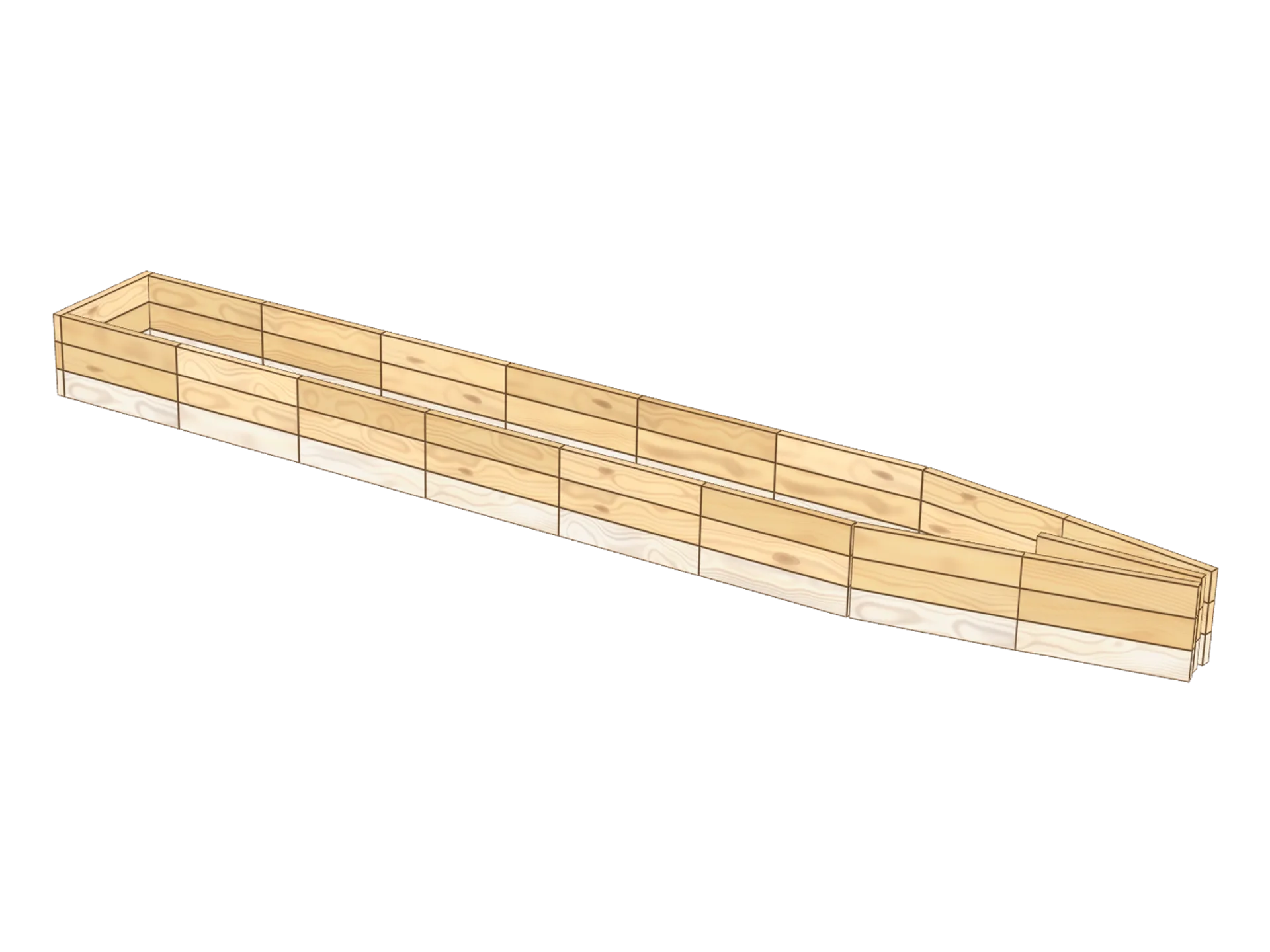
Step 2: build up the hull of the ferry
Add a second and a third row to the hull: 2 rows of 18 planks, exactly like the first one, so 36 planks in all.
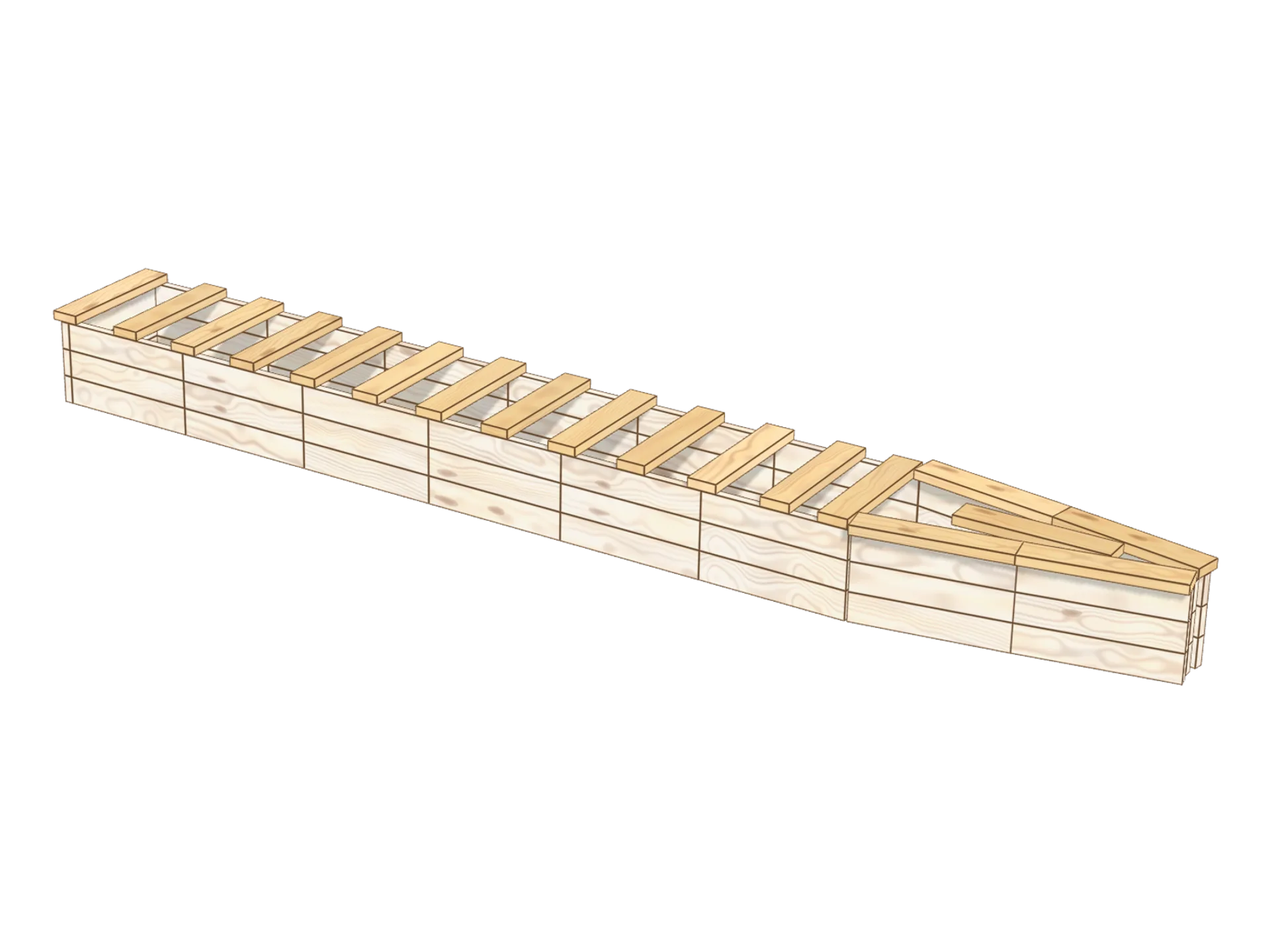
Step 3: lay the crossbars
Lay 13 planks flat, perpendicular to the hull (stop before the bow), from one side to the other, about every half plank: these are the crossbars, they hold the 2 sides together. Cover the bow with 5 flat planks, in the same direction as the planks below.
💡 Tip: look closely: the first plank at the back sticks out slightly, by half its width, towards the outside. If in doubt, check the 3D version!
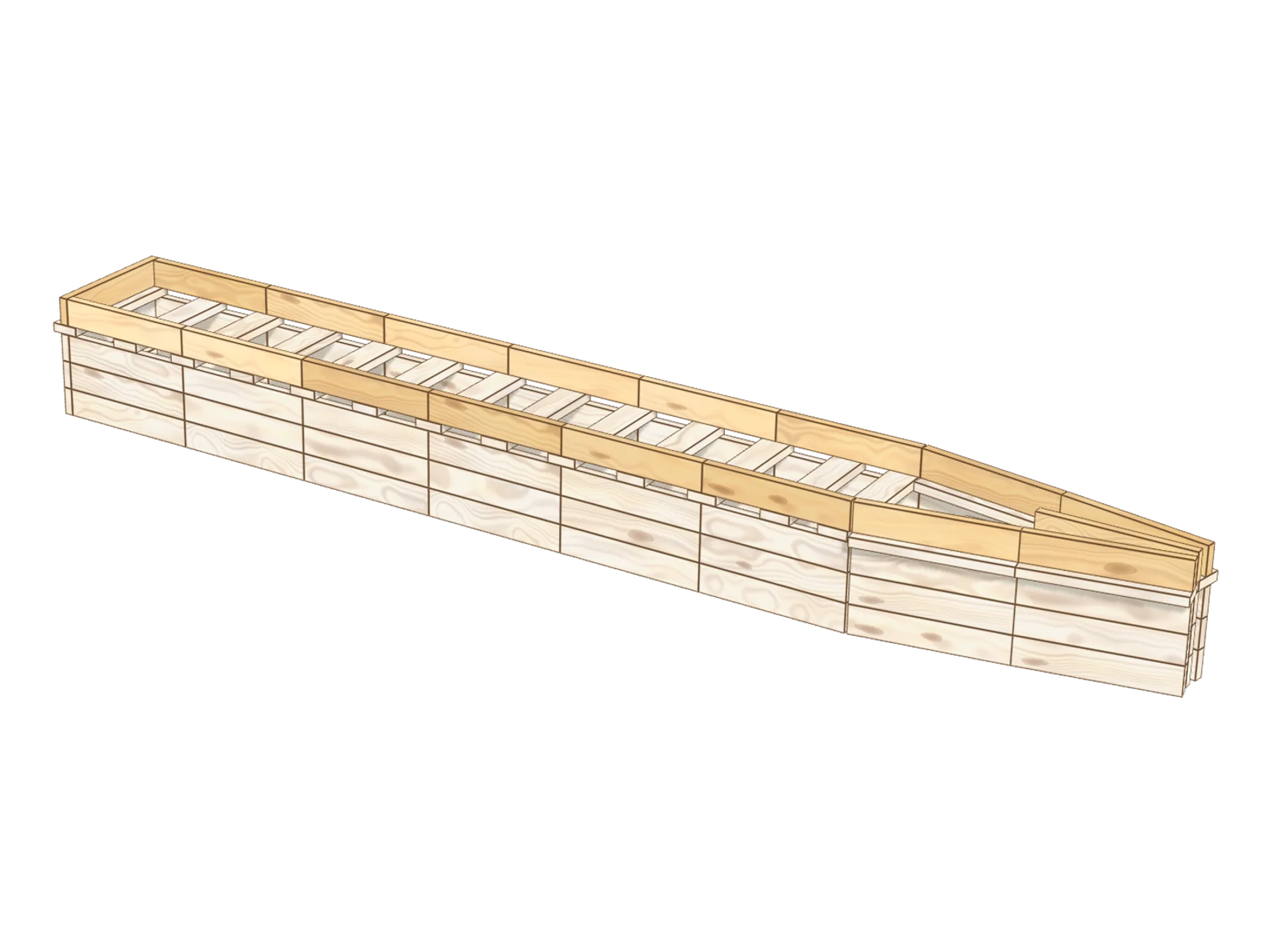
Step 4: the belt of the ship, a new row of planks
Stand a last row of 18 planks on edge, as in the first 3 steps: this is the sheer strake, the belt running around the ferry.
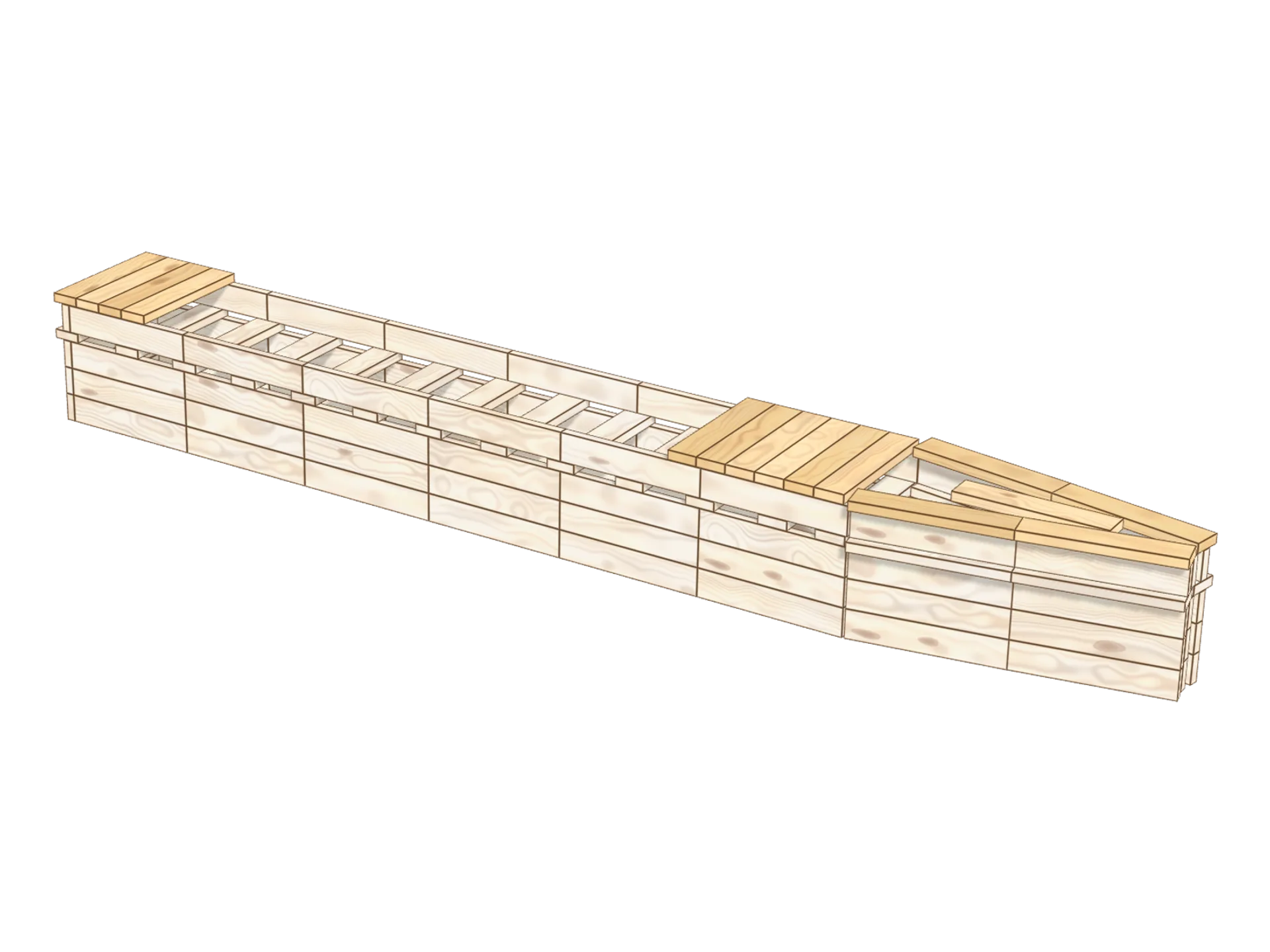
Step 5: the decks at the front and back
At the back, lay 4 planks flat side by side, perpendicular to the hull, and 6 at the front (before the bow): these are the decks, the floors of the ship. Cover the bow again with 5 sticks laid flat, but this time leave the middle empty.
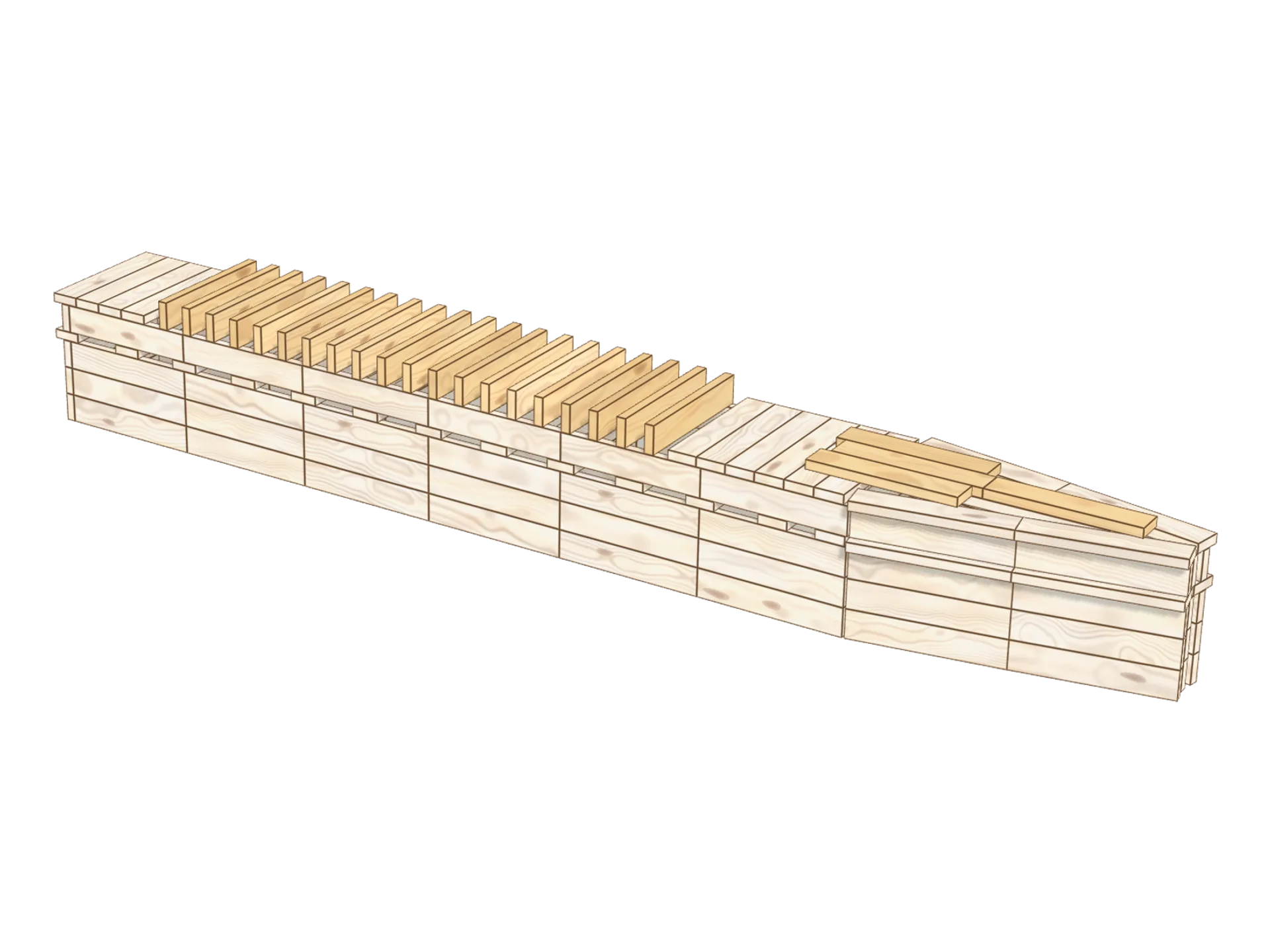
Step 6: the passenger windows
In the middle, between the decks built in the previous step, stand 20 planks on edge, perpendicular to the hull. Space them by the thickness of 2 planks (their thickness on edge): these are the windows. At the front, lay 4 planks flat on the deck: one that finally joins the 2 sides of the bow, 1 just behind it (laid on the front deck), and 1 on each side of that one.
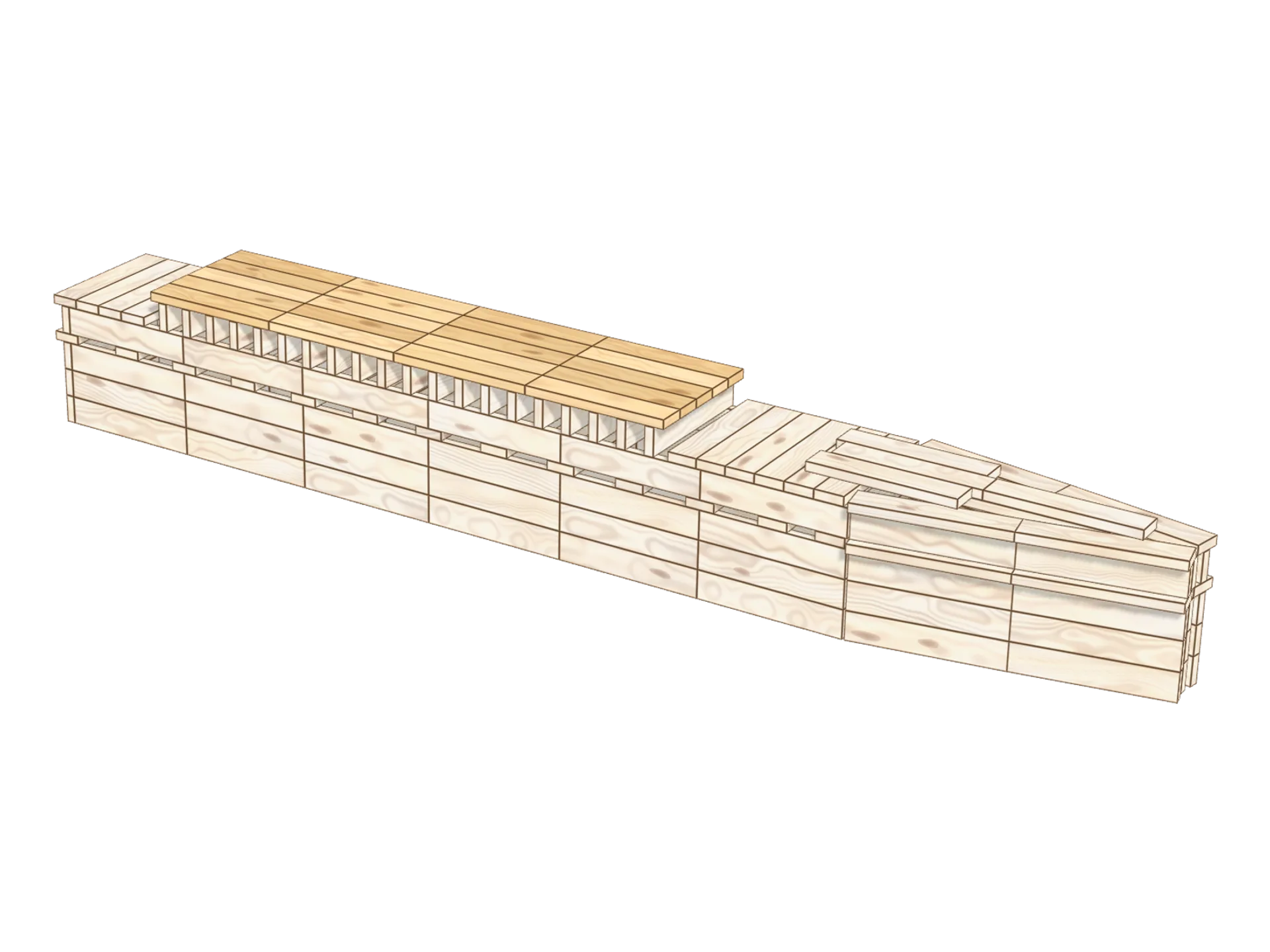
Step 7: the passenger ceiling with 20 planks
Cover the windows with 20 planks laid flat to make a roof, along the ship. This ceiling is made of 5 planks side by side, repeated 4 times to cover all the passenger windows.
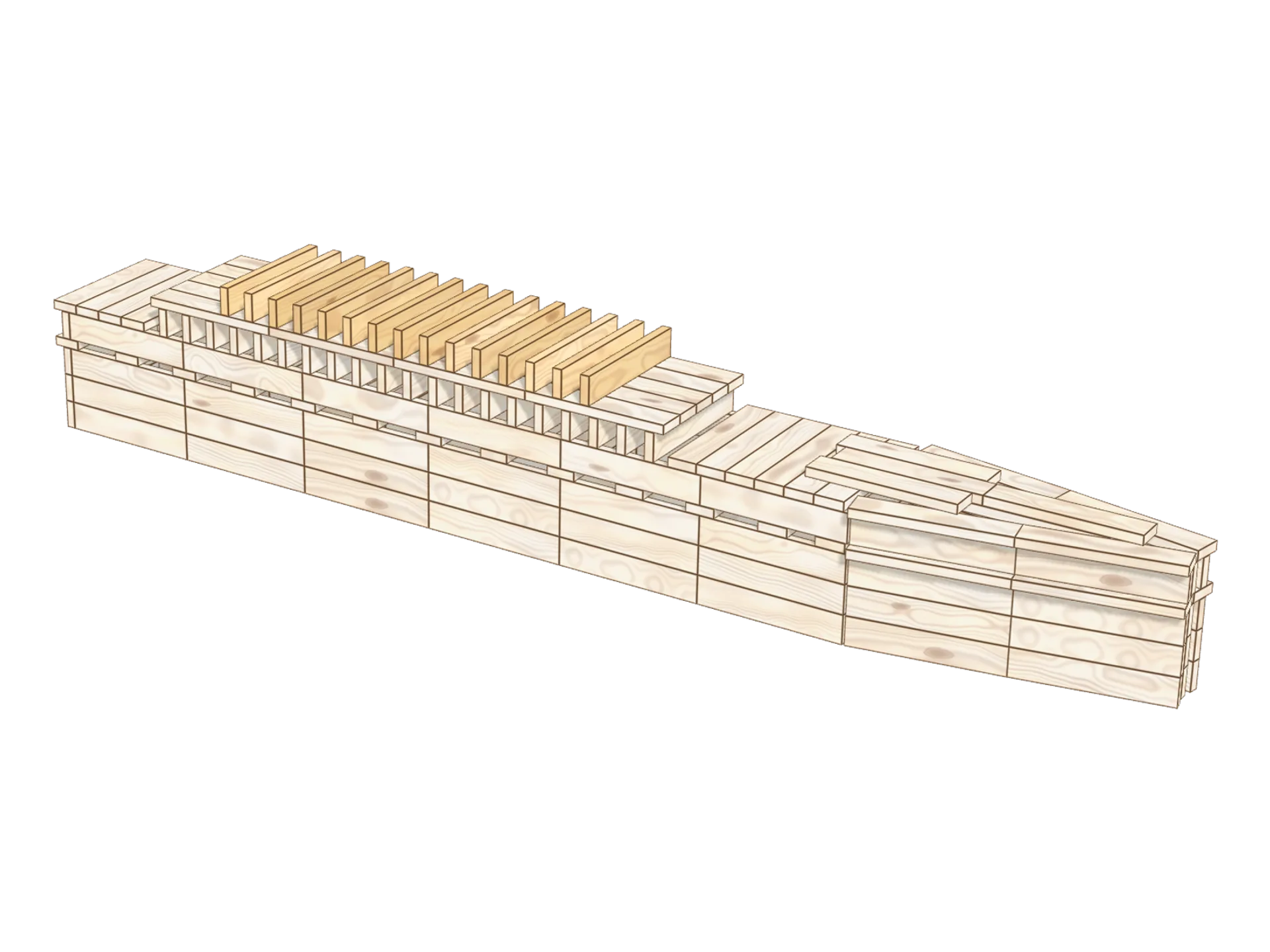
Step 8: the upper deck windows
Build windows again, this time with 15 planks, still on edge. Place the first window from the 3rd window of the lower deck, counting towards the front: this is the upper deck.
💡 Tip: careful, these planks are not right above the windows below, they are offset by the thickness of a plank. The spacing stays the same, though!
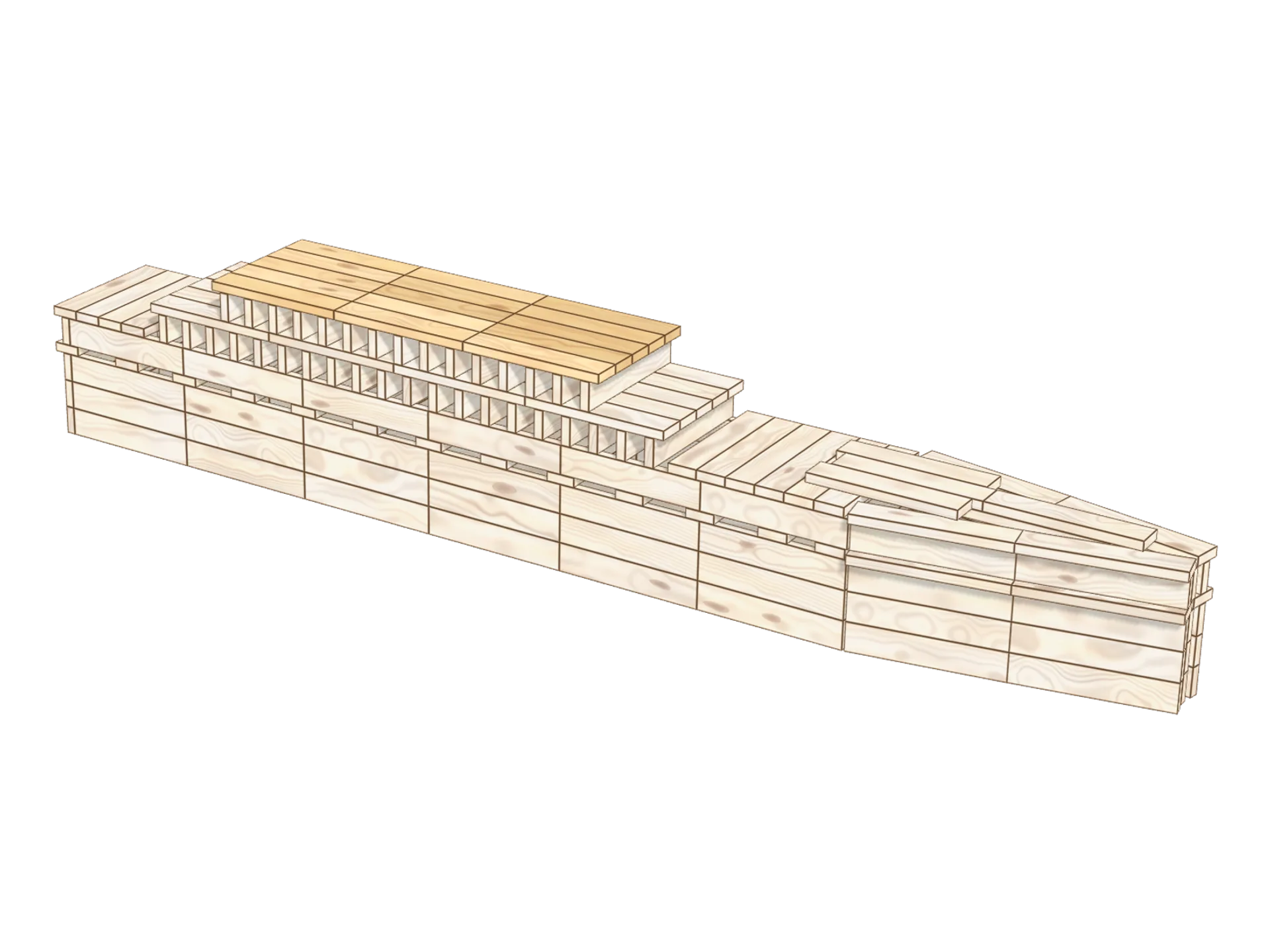
Step 9: the upper deck ceiling
Cover these windows with 15 planks laid flat: 3 rows of 5 planks side by side. It’s normal if it sticks out very slightly!
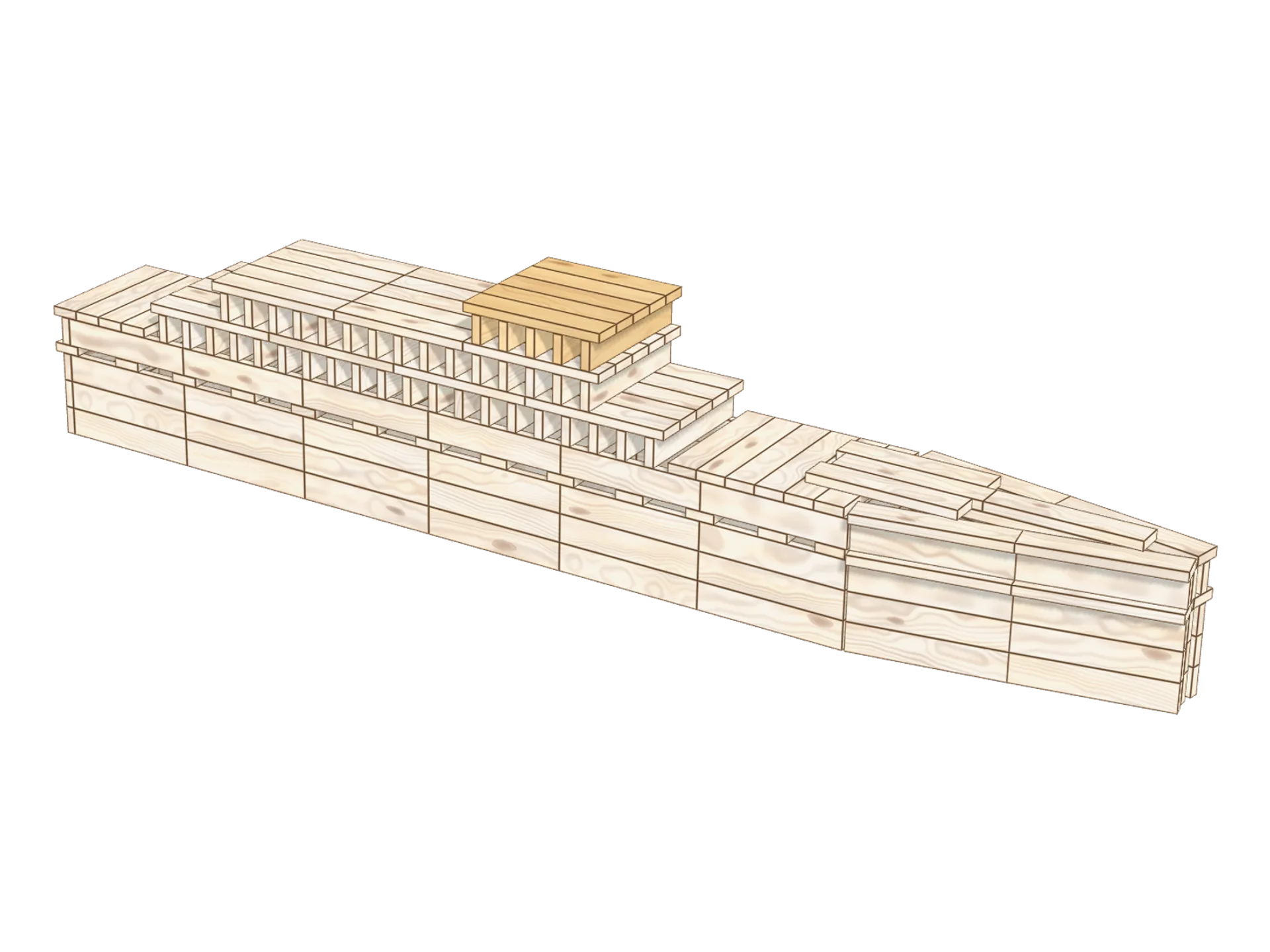
Step 10: the captain’s bridge
At the front of the upper deck, stand 5 planks on edge, right above the windows below, then cover them with 5 flat planks. This is the bridge, the cabin the captain steers the ferry from.
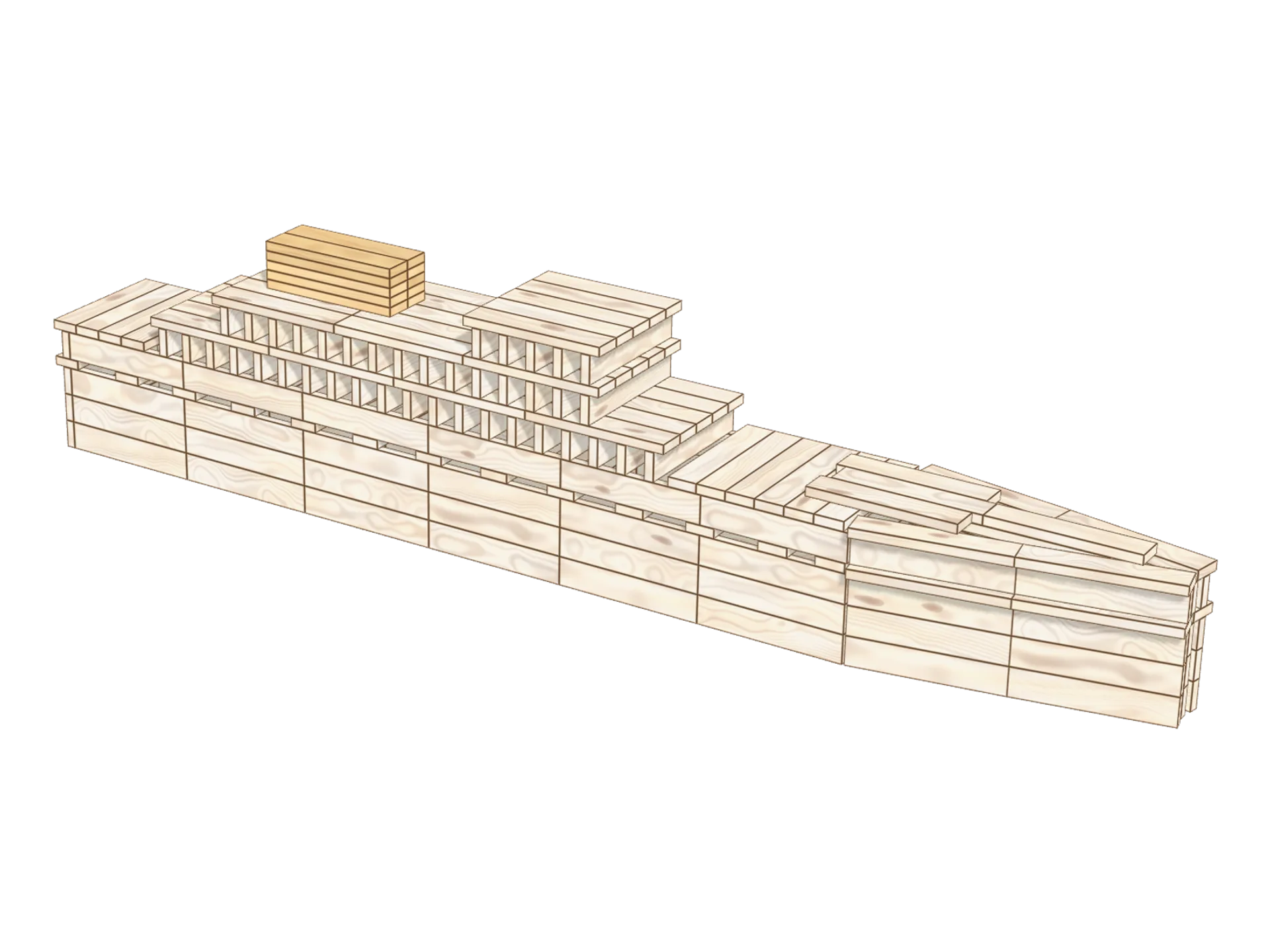
Step 11: the last planks for the ferry’s funnel
Behind the bridge, stack 5 levels of 2 planks side by side, laid flat: this is the funnel that lets the smoke out. Cast off!
Frequently asked questions
It takes 199, so a box of 200 planks is enough! You will use 90 sticks for the hull and its crossbars, 15 for the decks, 84 for the cabins and the bridge, and 10 planks for the funnel.
No, it builds very well in natural wood only. For the coloured ferry, you need 24 red planks, 36 dark blue, 102 white, 4 black, and 33 natural ones for the crossbars and the decks. The Colours / Wood button shows both versions. You can find coloured KAPLA planks on Amazon: https://amzn.to/45W4Qpw
From age 8, children can build this model on their own (younger ones will need an adult or an experienced builder!).
More models and building ideas for KAPLA planks!
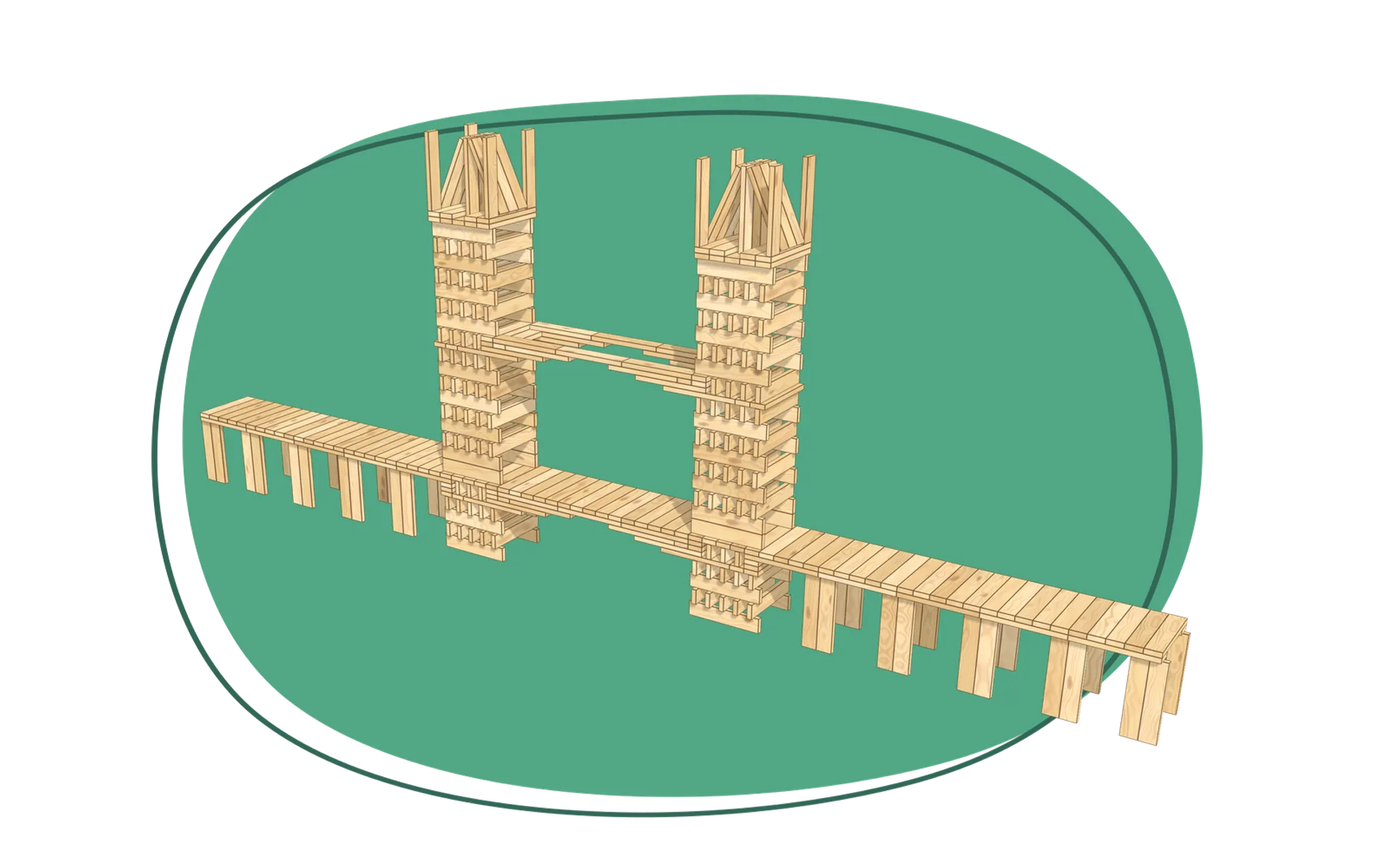
London's Tower Bridge
A very famous landmark, and a great challenge too! London's Tower Bridge is a difficult model that takes a bit of experience. You will probably need several attempts at the hardest parts.
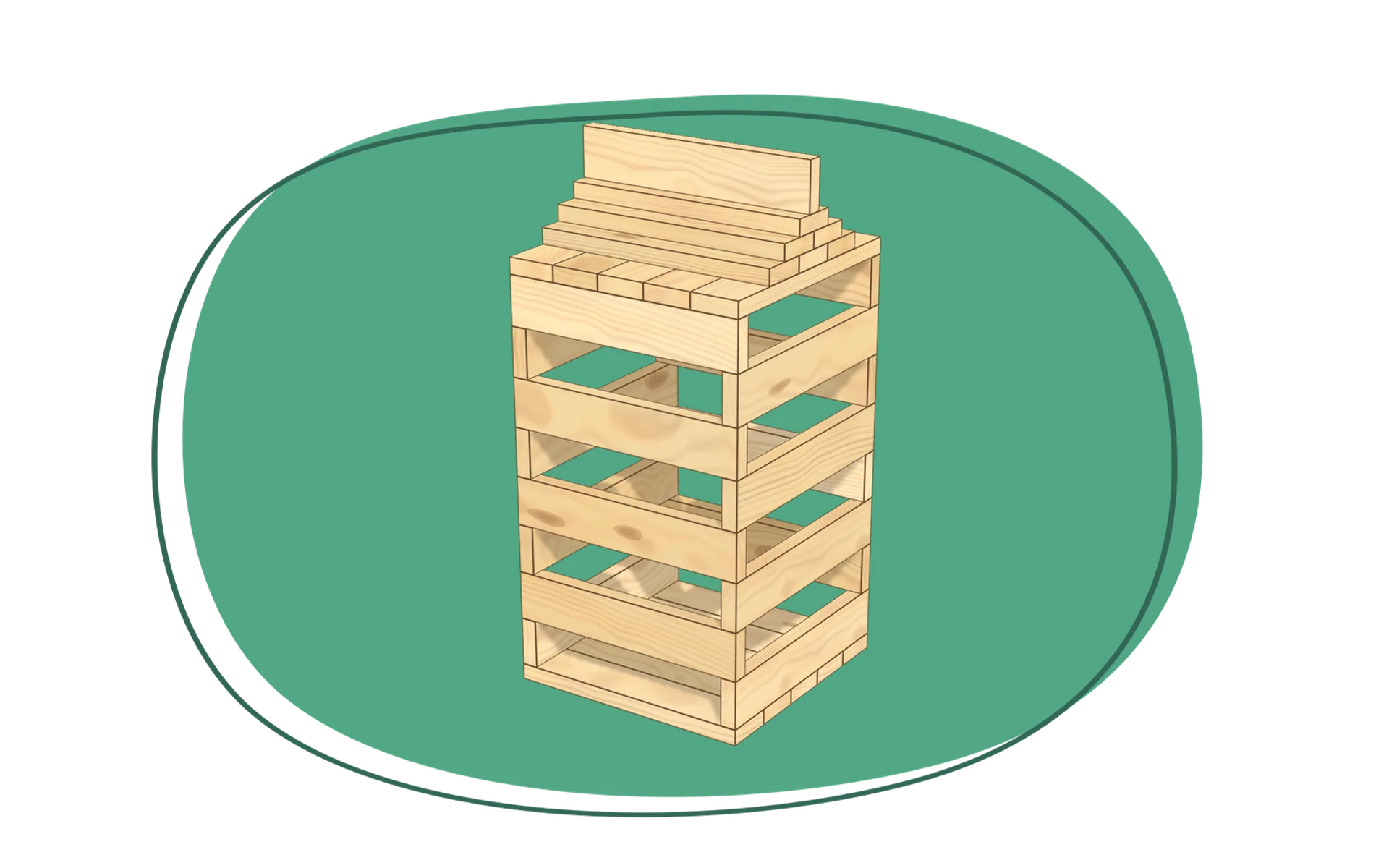
Simple tower
An easy first go at the tower for the youngest builders, with a base and a roof. Harder models are available on Woodels for older children.
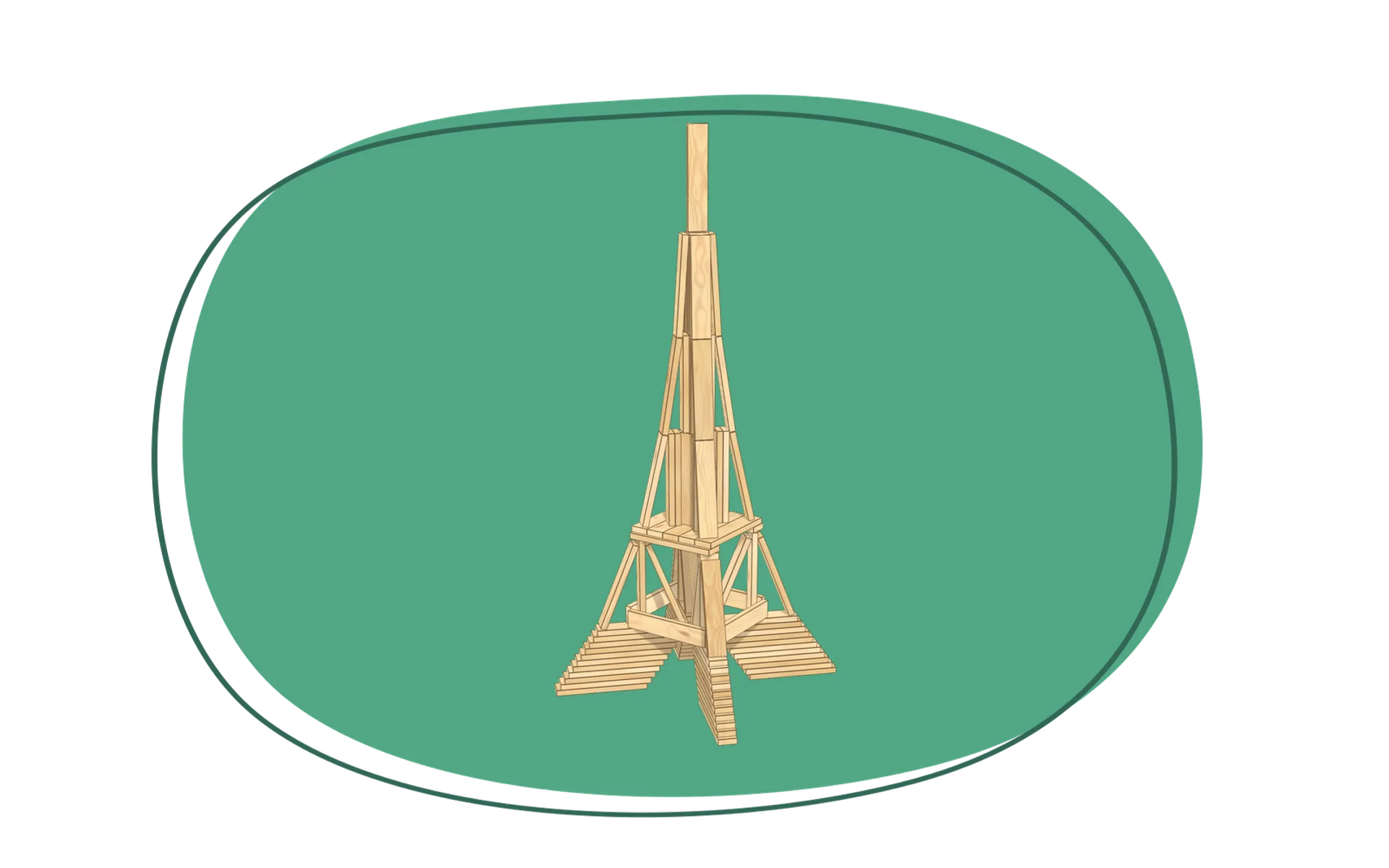
Eiffel Tower
Four stepped legs, a first floor on posts and a spire of slopes rising to 69 cm, with the 105 planks of the box.
Comments
No comments yet. Start the conversation!