
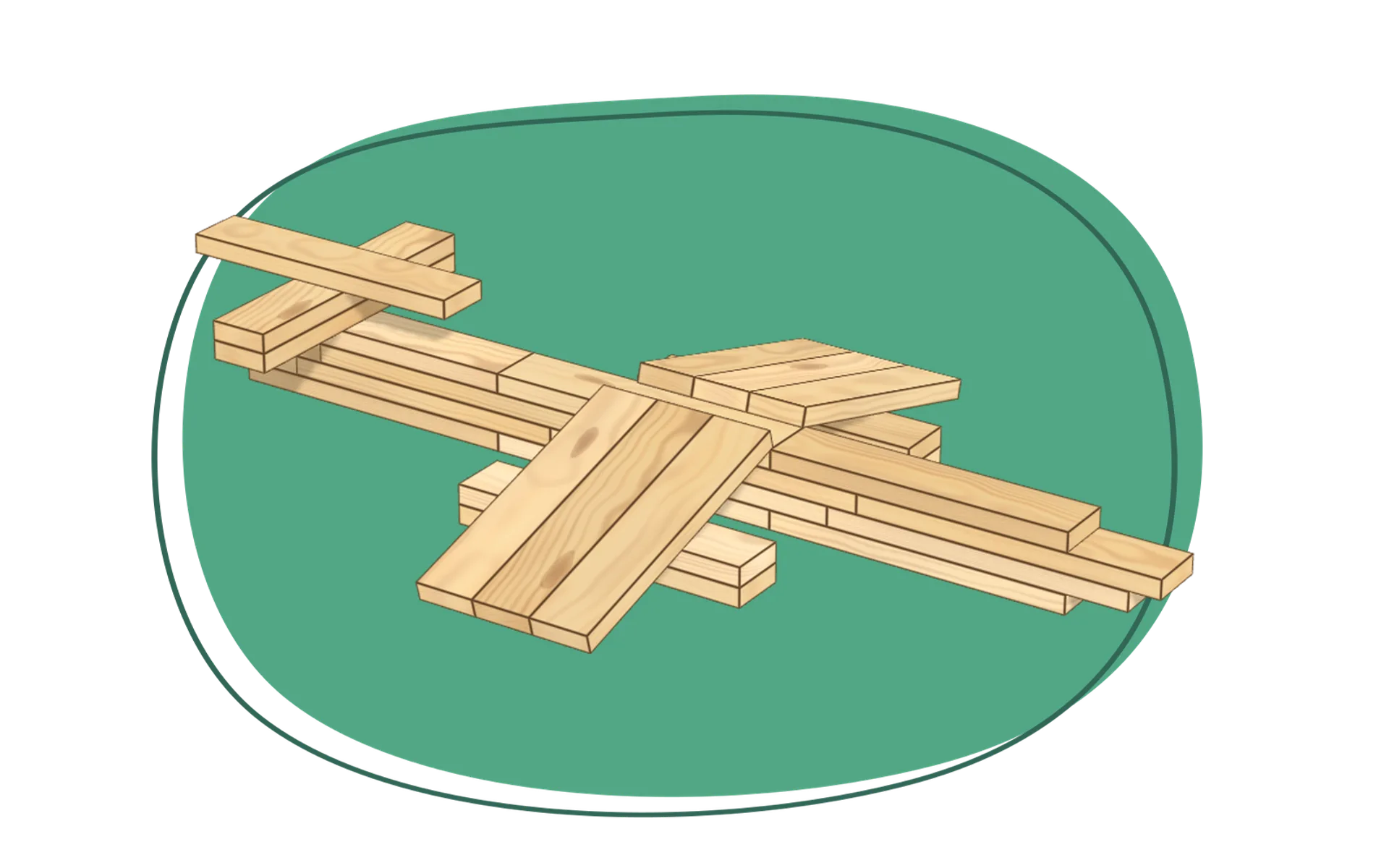
Simple plane model for KAPLA® planks
Pieces
Difficulty
Time
Age from
Dimension
Shared by
Build the plane from KAPLA planks step by step
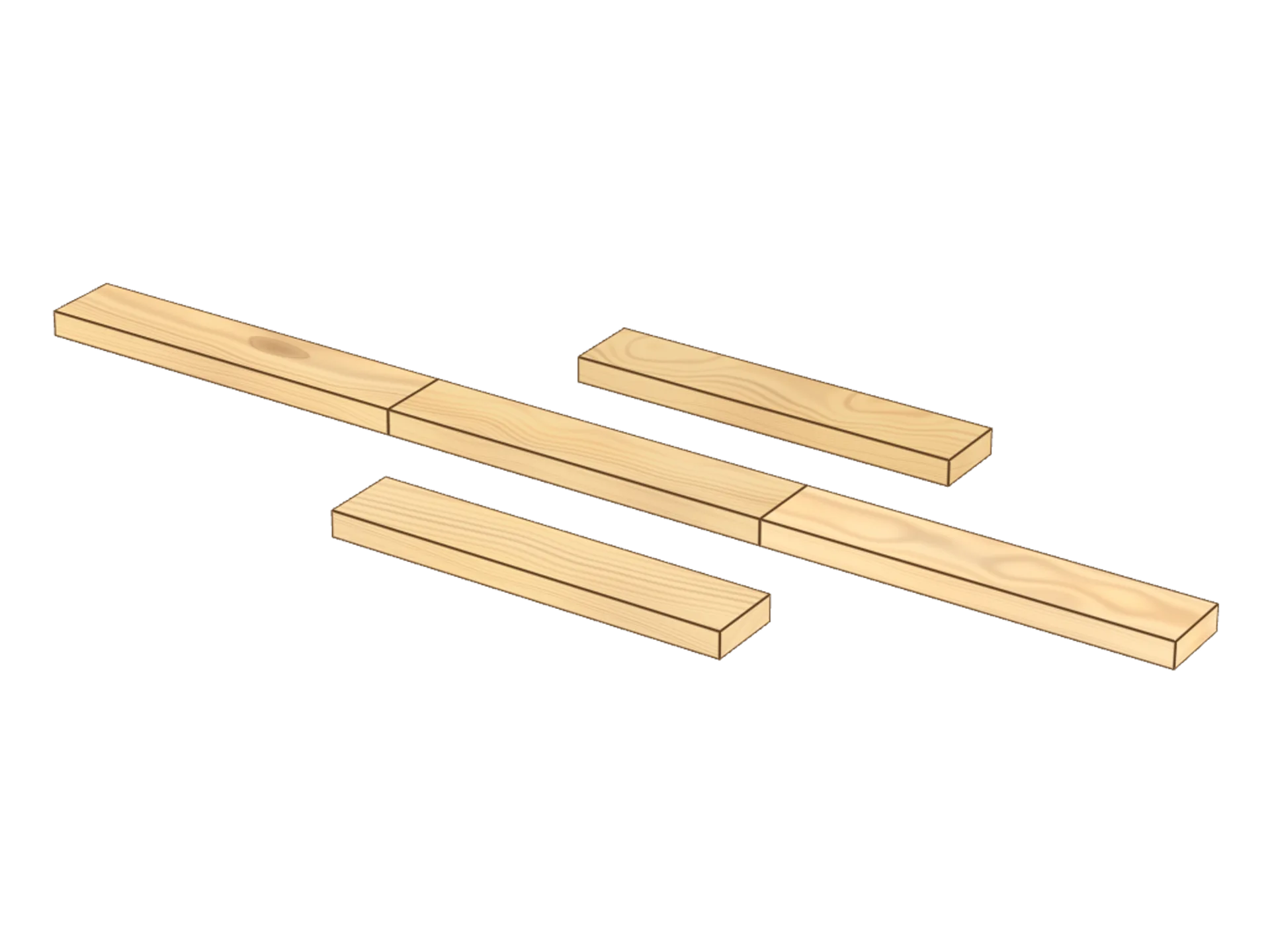
Step 1: lay the first base of the plane
Lay 3 planks flat, end to end: that's the fuselage, the body of the plane. Then add one plank on each side, well clear of it: those are the engines, and the wings will lean on them later.
💡 Tip: the engines are about one and a half planks away from the fuselage.
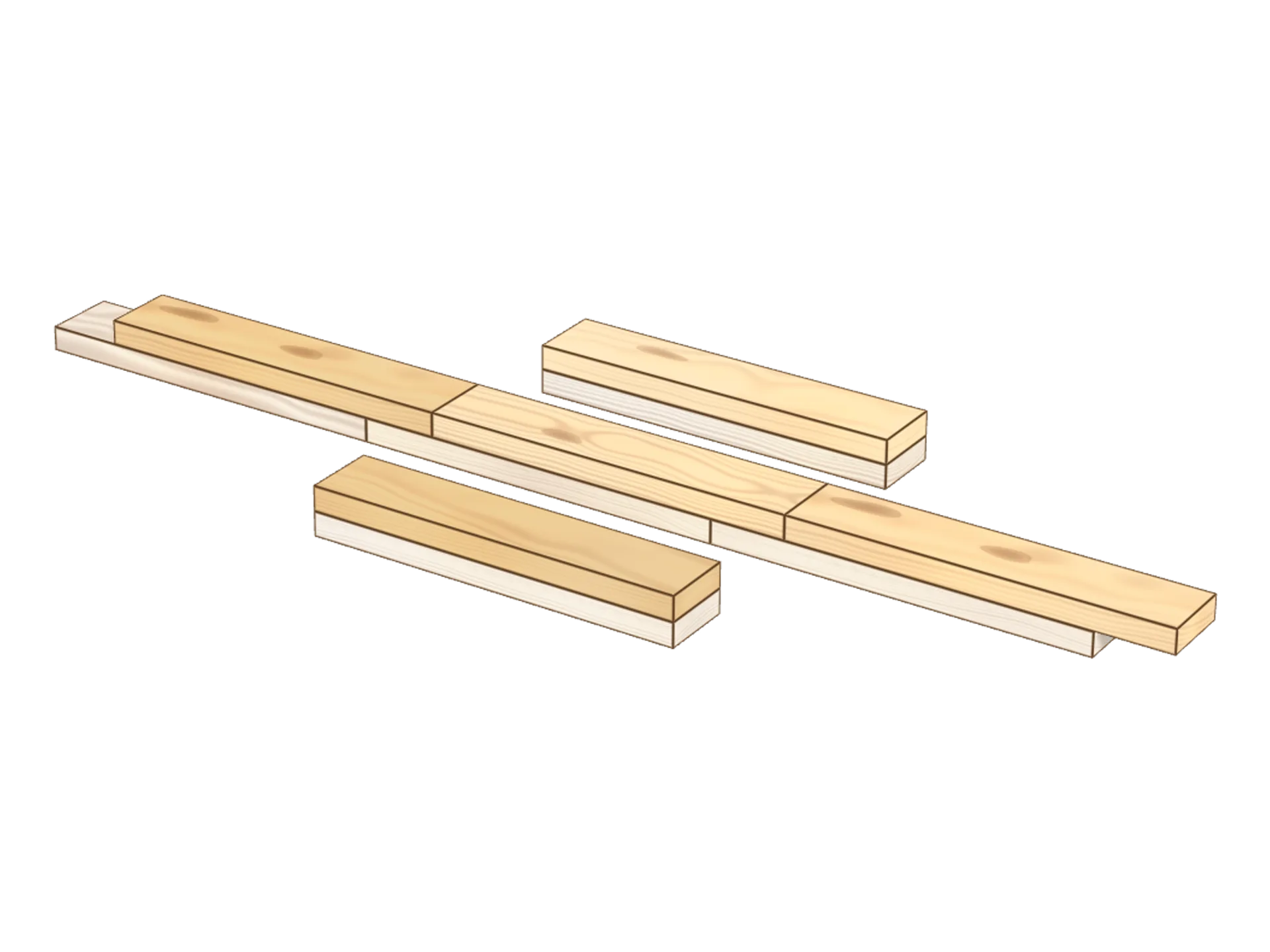
Step 2: build the second layer of planks
Lay another course of 3 planks on top of the first, but shift it slightly forward (this shift is what gives the plane its nose). Also stack a second plank on each engine, with no shift this time.
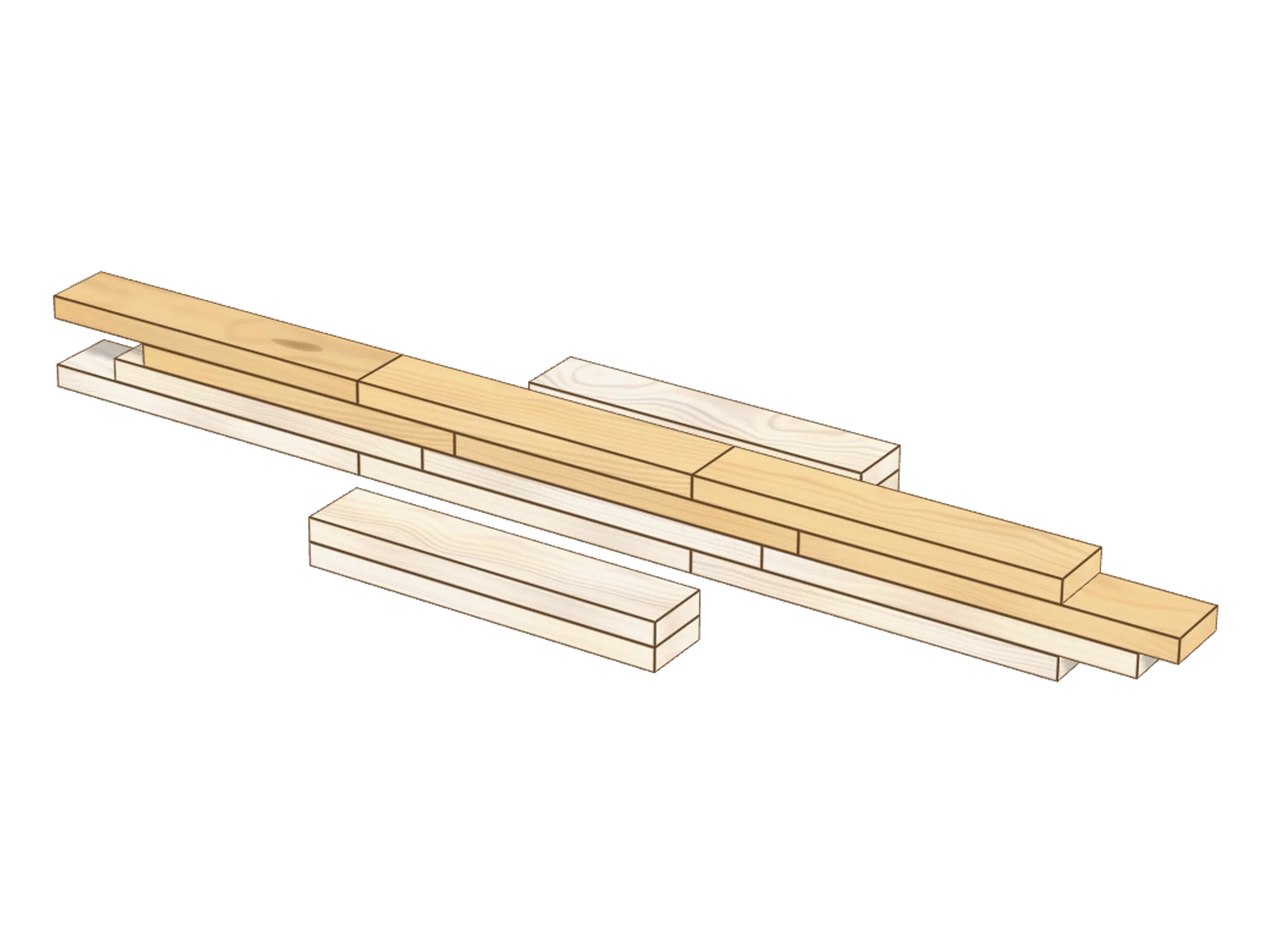
Step 3: finish the body of the plane (fuselage)
Build 2 more layers, still 3 planks each: the 3rd moves forward again by a tiny bit, and the last one comes back just above the first. The nose (the front of the plane) takes shape as a staircase.
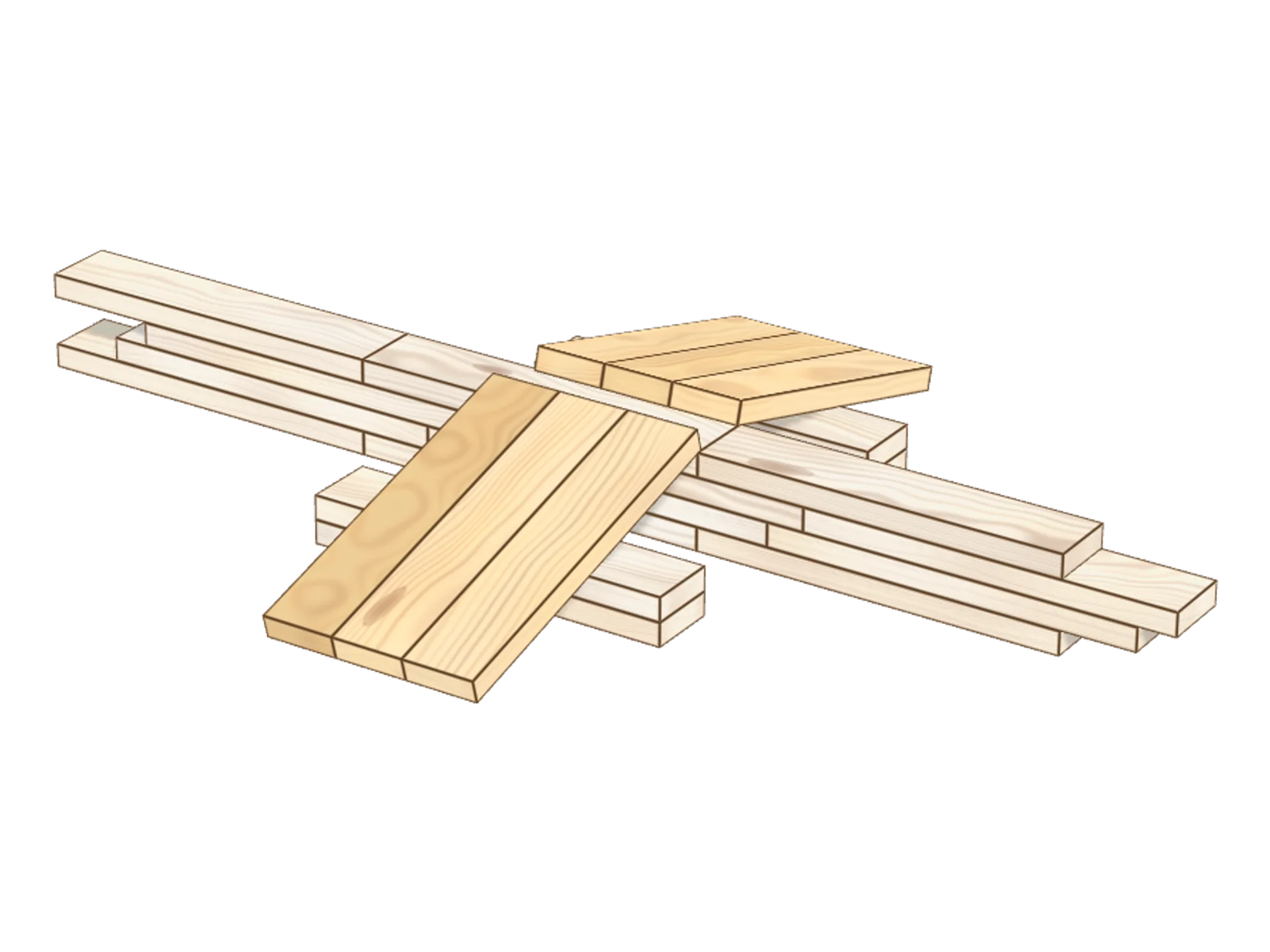
Step 4: lay the sloping wings
Lay 3 planks on each side, on a slope: the top rests on the back of the fuselage, and the bottom runs down to the table, passing over its engine.
💡 Tip: lay the middle one first, then press its two neighbours up against it.
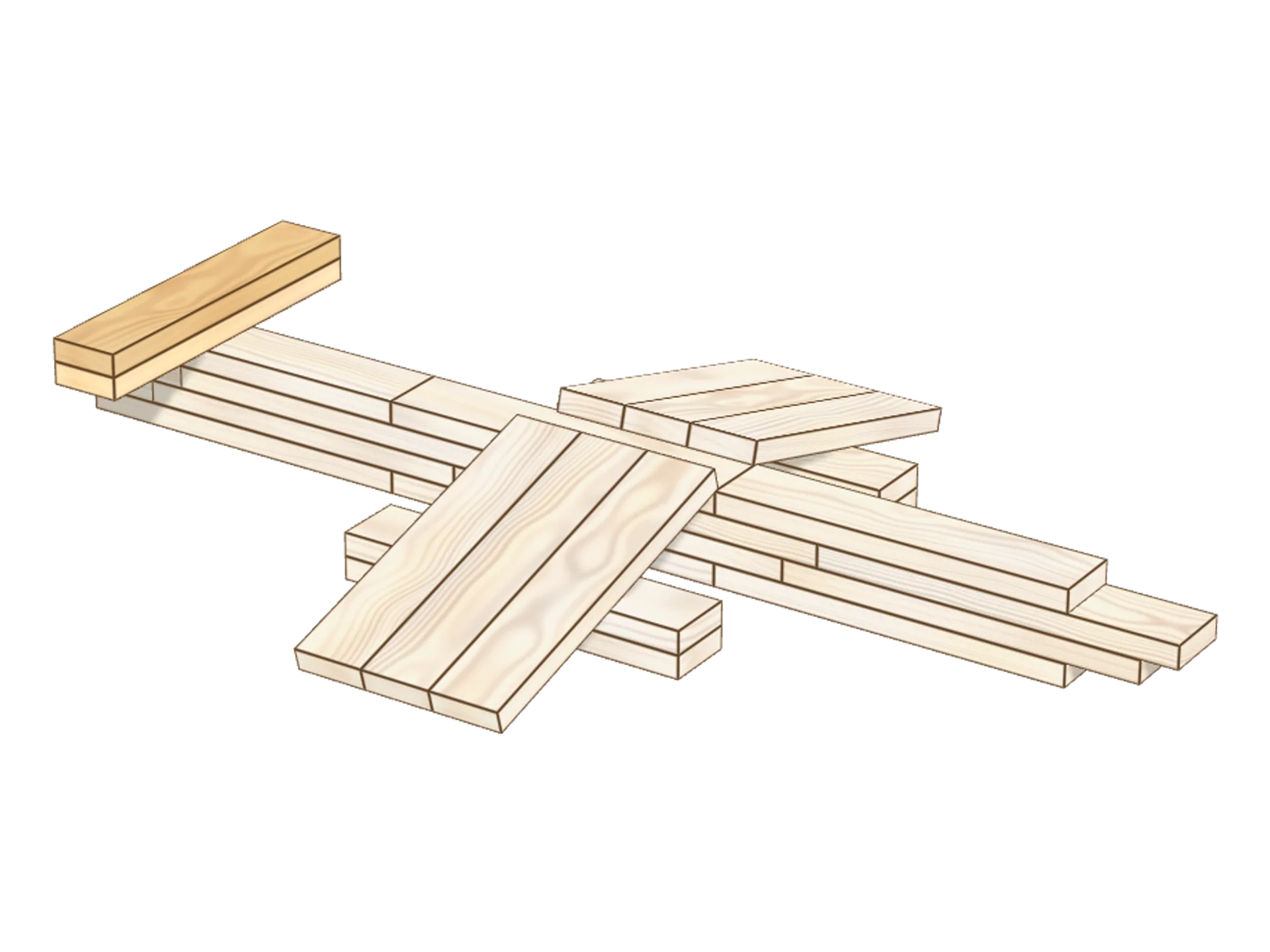
Step 5: add the tailplane to steer the plane
At the back, lay one plank across the fuselage, then a second on top of the first: that's the tailplane, the part that helps the plane fly straight.
💡 Tip: don't put it right at the back, move it slightly forward for balance.
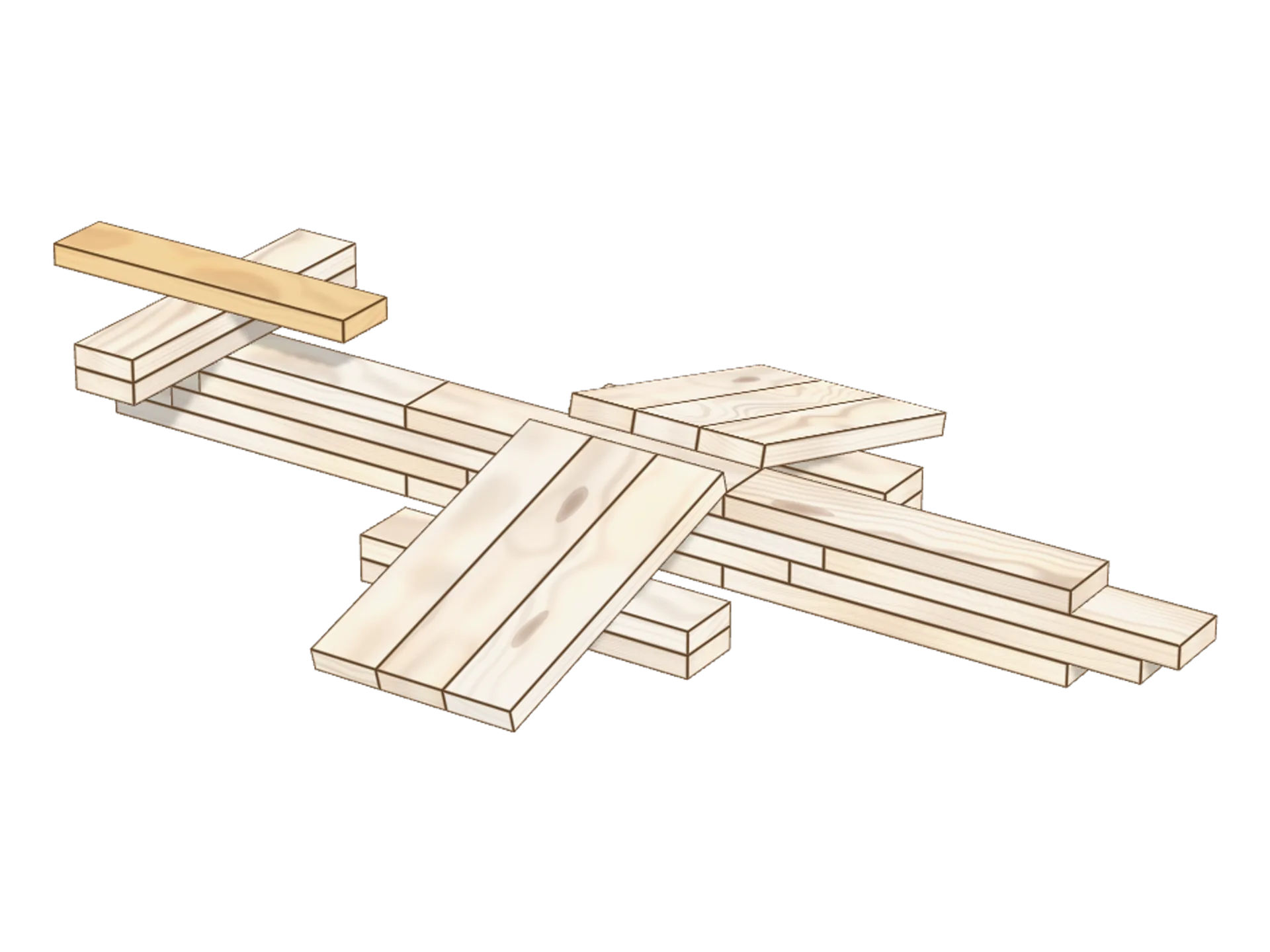
Step 6: the last plank of the model, the plane's fin
To finish, lay one last plank along the axis of the plane, on top of the tailplane: that's the fin, the part that stops it from turning on its own. Your plane is ready for take-off!
Frequently asked questions
The first advantage of this build is how few wooden planks you need to create this plane. The model takes only 25 planks: 12 planks for the fuselage (the body of the plane), 4 for the two engines, 6 planks for the wings and 3 for the tailplane and fin at the back.
The 2nd advantage is that it's a very simple model to build. A child can build it alone from age 4. Laying the sloping wing planks and positioning the back of the plane correctly are the 2 trickiest moves: an adult can lend a hand the first time!
More models and building ideas for KAPLA planks!
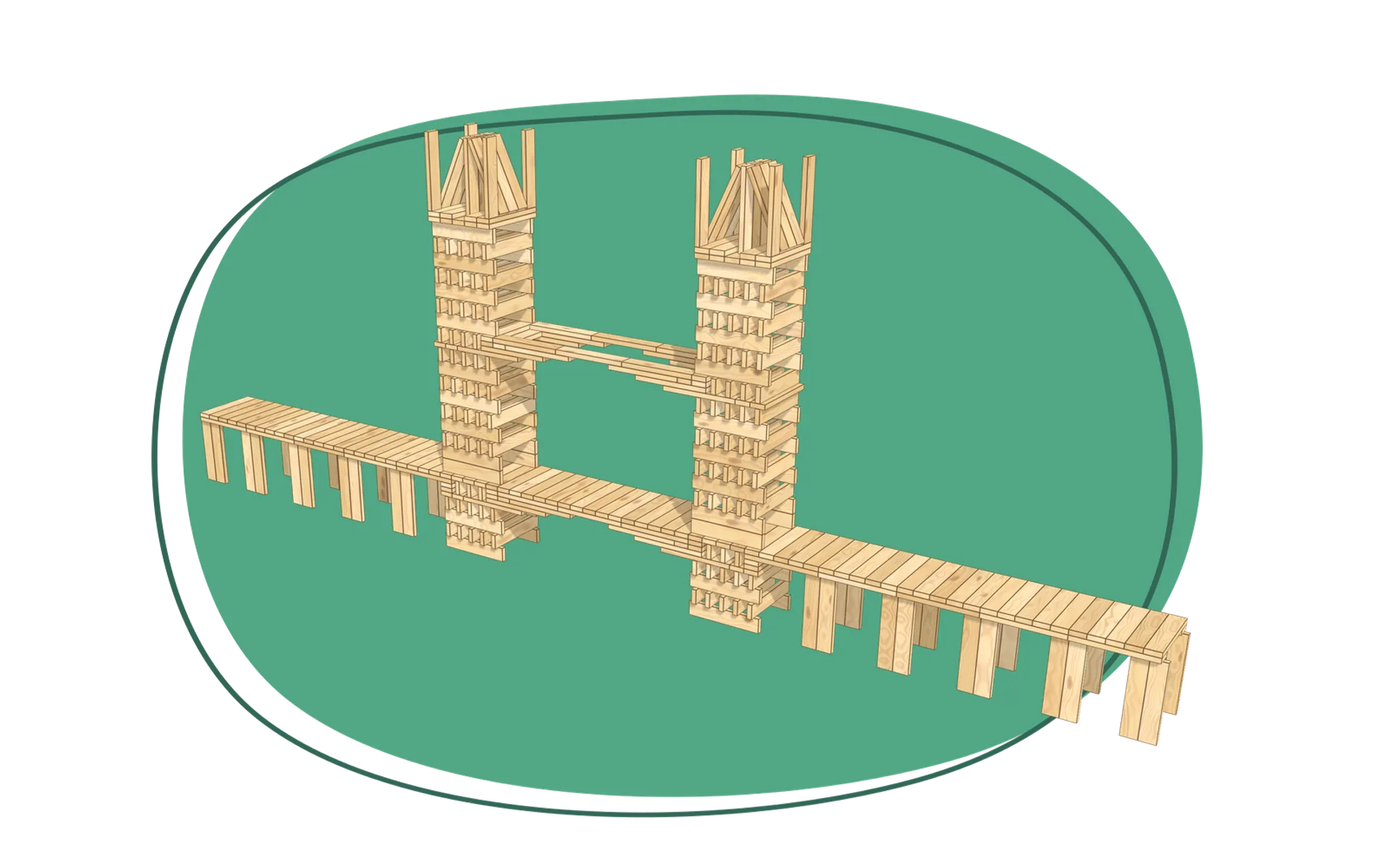
London's Tower Bridge
A very famous landmark, and a great challenge too! London's Tower Bridge is a difficult model that takes a bit of experience. You will probably need several attempts at the hardest parts.
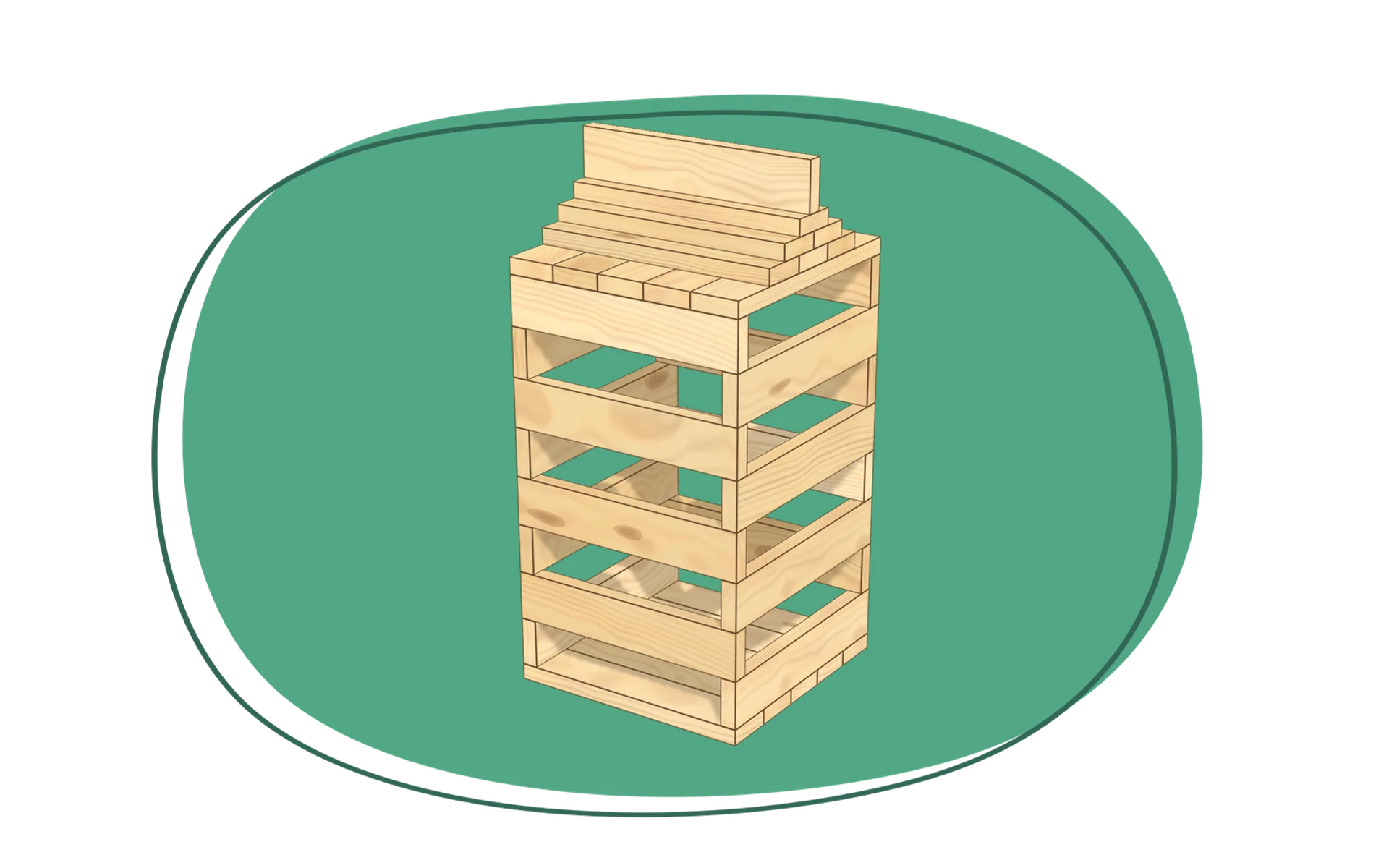
Simple tower
An easy first go at the tower for the youngest builders, with a base and a roof. Harder models are available on Woodels for older children.
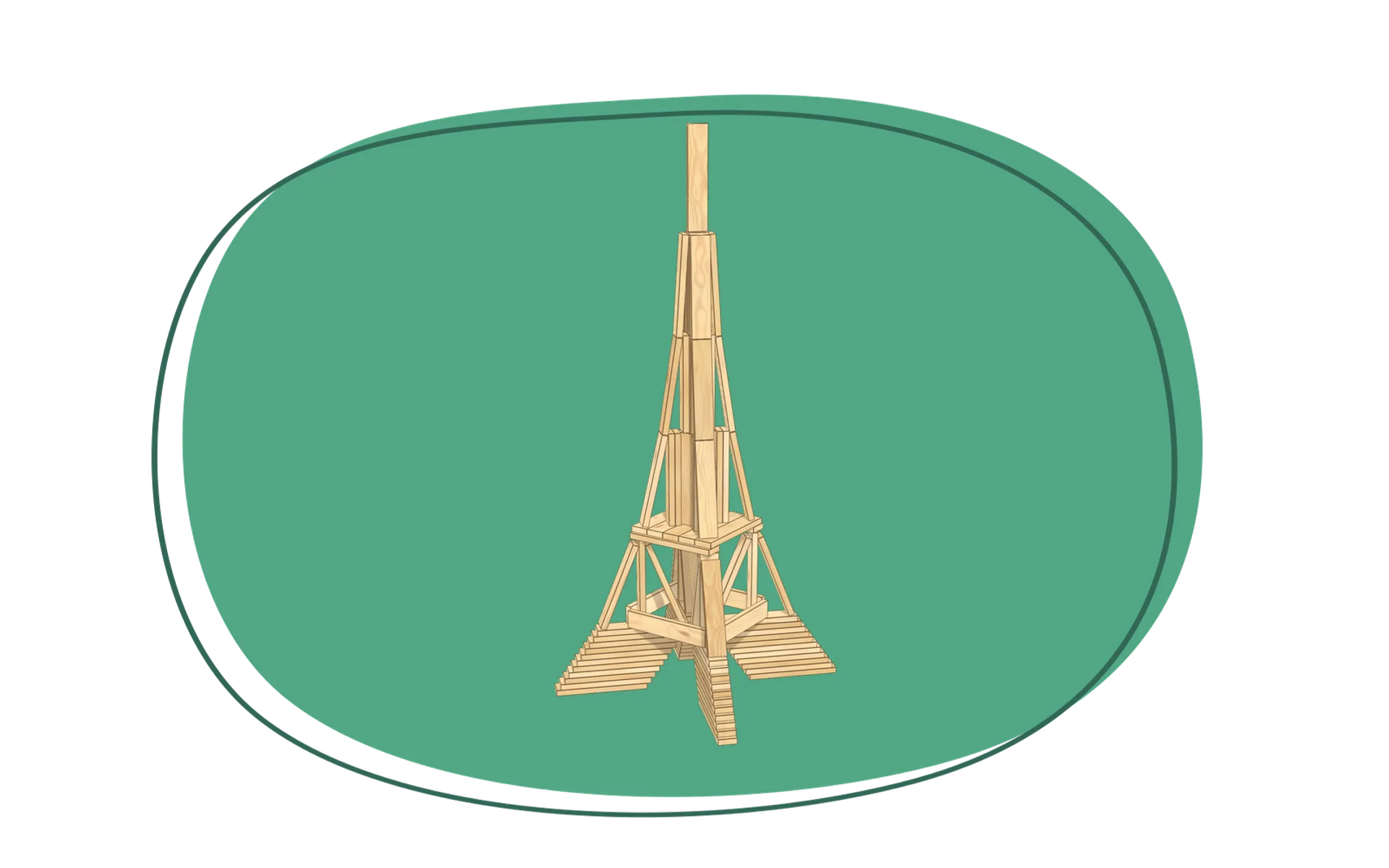
Eiffel Tower
Four stepped legs, a first floor on posts and a spire of slopes rising to 69 cm, with the 105 planks of the box.
1 comment
Lila
05 November 2026
Ma version de l'avion ! (désolée pour le tapis...)